
Are you wondering if you have mastitis symptoms? Firstly, poor you but let’s investigate it so you get some clarity for yourself. We will also look into what you can do for these symptoms and other potential helpful hints for mastitis.
Being extremely common to develop in the breastfeeding population (direct feeders & pumpers), mastitis symptoms occur in up to 30% of breastfeeding women. It often happens while a woman is breastfeeding, especially during the first 6-12 weeks and usually affects one breast at a time. Realising you are in the early stages of mastitis development can make a lot of difference because you can start working on getting yourself better and there is plenty you can do to reduce your mastitis symptoms.
Mastitis can really be quite a scary time for mother’s simply because the mastitis symptoms make you feel so poorly, and then you are trying to take care of a little one. It’s truly challenging to manage this so if you’re feeling overwhelmed, please understand that you are not alone and we have seen many mother’s in the same situation. Do the best to take care of yourself at this time and we will explain mastitis to you so keep reading.
Mastitis symptoms can come on so quickly that it can be a confusing time trying to work out what’s going on. Many women think that they have in fact got a virus due to the flu-like aches and the potential for a headache. It can be later that a red patch and pain in the breast is noticed and then the mastitis symptoms become clearer as a bigger picture of the problem. If you have any of the above listed mastitis symptoms you should consider mastitis until proven otherwise.
Factors to consider antibiotics are for severe mastitis symptoms such as vomiting, fainting, no improvement in symptoms between 24-48 hours from onset. Another consideration would be nipple damage which can provide an entry point for bacteria to infect the breast causing the mastitis. What often happens however is that women are provided inaccurate information about mastitis inflammation and are prescribed regardless. This is a commonly occurring practice as many medical professionals have an inaccurate understanding of mastitis.
Yes, it’s common to have headaches when you have mastitis. There are a number of reasons this can be the case. Consider the fever you might be experiencing, not only will it affect your body chemistry but it also will dehydrate your body. I’m sure you’ve heard that headaches can be caused when you haven’t drunk enough water, well headaches can also be caused when you sweat too much out of your body. Posture may also contribute to headaches during mastitis. Mastitis tends to make you need to rest more frequently and your neck can become stiff because of less moving around. Neck tension can also be from a slouchy type of posture. After all, feeling so unwell you wont be standing with tall posture and this can place strain through your spine which may consequently bring on headaches.
Fortunately, you can help yourself at home…RIGHT NOW!
Often antibiotics are prescribed and we will talk a little bit more about that in a moment. But there are plenty of other ways that you can get relief before you head for antibiotics so consider the good old “simple” things because even if you do need antibiotics, there is far more involved in good mastitis treatment than medication.
You need to work out how you can relieve your pain and that can be from several different approaches.
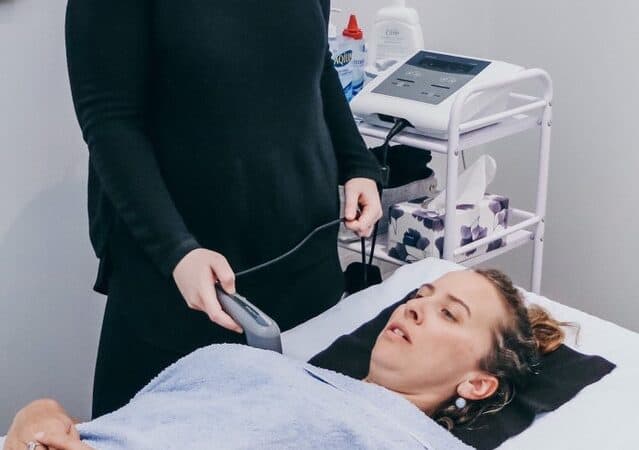
We have been teaching women how to massage the mastitis away for years in clinic at Boroondara Osteopathy where we have the Melbourne Mastitis Clinic. Our techniques are focused on the physiology – the behind-the-scenes stuff – that occurs in the mastitis process to reduce the mastitis symptoms.
Many people will tell you it’s an infection, and although it can be certainly become one, many cases of mastitis are an inflammatory reaction in one or more of the breast lobes themselves (where the milk is made). Due to this fact Antibiotics will only help if your mastitis is the infection type. They will not help you if your case is solely inflammatory. Unfortunately, there is no easy was to tell the difference from the mastitis symptoms, both inflammatory and infectious mastitis present the same symptoms.
We don’t prescribe them in our clinic, but we do refer our clients to their doctor if we suspect they have an infectious mastitis. Antibiotics are a really useful tool in these cases and only add to the other types of therapy mentioned above. So if there is an infection, the antibiotics will kill off the bacteria causing it but they do not remove the fluid congestion which you will feel as thickness or lumpy tissue in the area of your mastitis. That is why there are limitations with antibiotics and why women are commonly left with post-mastitis lumps, when the only treatment they received was antibiotics. Often the only advice they were give was to pump the breast more frequently too, which also does not receive mastitis congestion. So are we anti or pro antibiotics? We get asked this so often that we wrote a blog about here.
Mastitis is defined as an inflammation of the breast that may or may not also have an infection. It has sometimes been referred to as a ‘milk fever’. Unfortunately for mothers, mastitis remains synonymous with breast infection in the minds of many health professionals. They are often unable to help a woman with the condition to continue to breastfeed, and consequently may advise her unnecessarily to stop breastfeeding altogether. This is terrible for the mother and baby and increases the risk of the mother developing worse mastitis symptoms and also post-natal depression.
Although many people are told that mastitis is in the milk, it is not the case at all. Mastitis occurs from milk stasis in the breast, that means stagnant milk that has not been flowing well enough. When this occurs, which may be for a number of reasons we will get to, the milk is forced between the microscopic cells that make up the milk-making lobes and into the breast tissue outside the milk-making lobe. There are chemicals naturally occurring in the milk that trigger an inflammatory reaction. This is the red, hot breast, fever and aches and pains. That inflammatory fluid PLUS the escaped milk form the lumpiness you feel with your hands. It’s important to not here that the fluid of mastitis will never re-enter the lobe and duct system to exit the nipple, it is physiologically impossible despite many women being told to pump more to clear out the mastitis. It’s important to continue pumping and feeding on your regular schedule to reduce the stagnant milk situation from continuing.
So it important to understand that mastitis is the result of another problem or cause which we will get into next. So if you experience mastitis as a repeated issue, don’t settle for the common advice of antibiotics and pumping because it is a very limited approach to treatment and is often the reason women grow feelings of anxiety and helplessness with repeated mastitis episodes.
Given the increased incidence of mastitis early after birth there is a risk of it occurring due to inexperienced breastfeeding of the mother and of the baby. Many mother’s are not educated in mastitis causes and therefore are not aware of the risks of it developing. Milk stasis is the main factor and this can be due to a number of reasons including:
The short answer is YES. Mastitis, especially if you experience recurrent bouts commonly indicates an issue in the breast tissue. Although many health professionals will look at mastitis as the primary problem, if the breast tissue is not functioning well (tight, restricted, congested) it will not allow for ease of fluid to flow through the breast and this can be a cause for milk stasis that leads to mastitis.
Another scenario that we see often is that “mum posture” factor. When you have slouched posture, you creates problem for the breast to drain it’s lymph fluid which is produced in any active tissue of the body. The can then create an external pressure on milk duct tissues and consequently create a breast vulnerability for mastitis. Vulnerability is a really useful way to look at recurrent mastitis becasue it speaks of factors that are not milk, that impact breast function. This is the forgotten part of breastfeeding health.
It’s also worthwhile to check if the baby is impacting the drainage of the breast tissue of milk. We have assessed for tongue-ties (check out our Tongue tie and Mastitis blog), lip-ties, compression through the baby’s neck and cranial bones, as well as imbalances associated with head-turning preferences which can affect baby’s ability to relax into feeding. If baby is unwell, this can also impact their ability to drain the breast efficiently especially if they have a blocked nose…we all need to breathe when we eat.
It be confusing at time trying to work out what the problem is with your breast and the bottom line is no one really teaches us prior to breastfeeding, about breastfeeding related health issues. You can simply wake up in the night or morning with a new problem and be starting that wretched google search for answers that are accurate and non-contradictory. Below we will visit a few other common health related conditions of the breast to assist with giving you a more rounded understanding of why conditions occur and what they actually are from a physical point of view.
There are 2 types of engorgement:
Engorgement always affects the whole breast rather than in sections which is the case for mastitis or blocked ducts/blebs. In the period just after the birth of your baby, with the birth of the placenta your hormones levels are altered to trigger your body to begin working on a greater supply of milk for the baby. With this considerable change in breast activity, there is a greater fluid level combination of blood and lymph PLUS the milk production that swells the breast tissue.
Pathological engorgement however, is different. This simply occurs when the breast is bursting at the seams due to milk not be drained early enough and so will resolve simply by draining milk. This may lead to mastitis if left too long.
If you want to know more about engorgement and mastitis, check out our blog.
Blocked ducts are when you have a clog inside a milk duct. If you think of the milk duct as a tunnel and then a plug forms and stops milk-form being able to flow down, that is a blocked duct. They can present with a faint pink/reddish tinge and mild fever. Tenderness is common as well as a wedge shaped lump where that specific duct drains the breast tissue. This can lead to mastitis if left too long.
A bleb is a blockage like a blocked duct but rather then it being inside the duct, it is a blockage at the surface of the nipple. The nipple has around 6-10 pores to drain the lobes of the breast but sometimes a skin can grow over or you can get a milk clog right at the surface. It looks like a whitish pimple on the nipple but may also be a creamy yellow colour. Sometimes they are difficult to spot and can be best to observe by beginning a feed or pump and then stopped part way to inspect the nipple. Blebs can also be cause by nipple trauma from a pump being too strong or poor latch/biting from the baby. Bleb can lead to mastitis due to the milk stasis it causes.
Yes, there is definitely some things to work on to prevent mastitis. Some are easy and some require a little self-learning to understand.
So let’s begin with the easy stuff to prevent mastitis.
This is an especially important question to consider because of the potential for a mastitis infection to lead to the formation of an abscess. An abscess is an encapsulated pocket of pus that collects in tissues, organs or spaces inside the body. The breast is one such place that an abscess can develop.
When an area in your body has an infection, the body’s immune system sends white blood cells to fight that infection. These cells collect and combine with the damaged tissue and germs, creating liquid called pus.
An abscess is characterised by a painful, swollen lump that’s filled with pus.
An abscess from a mastitis infection does not occur straight away in the first few days of you getting mastitis. What to look for is a lump in the breast that feels firm and rounded and seems to remain days after all the other mastitis symptoms have settled. The skin overlying the area is often a different colour to the adjacent skin, ranging from bright red, to dirty red or even a grey/brown colour. The skin may also be hot in this area and may have peeling skin.
The best way to diagnose a breast abscess is to get a diagnostic ultrasound that will look for density changes in the tissue under the skin. Our practitioners have pre-diagnosed many abscesses simply by taking a thorough history of the case of mastitis and then feeling the tissue. To the experienced touch developed by our practitioners, an abscess is often easily detected on examination. Our next step would be to refer the mother to a GP for a referral for the diagnostic ultrasound.
Treatments of a breast abscess include draining the abscess and antibiotics. This may require a short stay in hospital for the appropriate treatment. Please see your health professional if you suspect you have a breast abscess from mastitis as it really does require some medical intervention.
Cultures may be taken, either of breast milk or of material taken out of an abscess through a syringe, to determine the type of organism causing the infection. This information can help your doctor decide what kind of antibiotic to use. Sometimes the initial antibiotics are not well matched to the bacteria present in the abscess which is where a culture will provide the best chance to receive the most fitting antibiotic for the particular bacteria.
Need to someone about your mastitis? You can call 03 9859 5059 or book an appointment in our online bookings for either an in-clinic OR virtual consultation.
Our niche skill at the Melbourne Mastitis Clinic is feeling the tissue and determining the best techniques to not only treat the symptoms of mastitis but also work through prevention strategies to assist the mother in her breastfeeding journey. This also involves tongue-tie considerations for mother’s with recurrent mastitis episodes, as well and considering postural effects on the breast and the structural foundation and attachment of the breast to the chest wall.
Unfortunately, that poor little breast of your is not well understood in many medical circles, and often seen as an appendage on the front of your body that is just a milk-maker. That huge job of making milk exposes underlying issues in tension and compression of the beast tissues. This is a common finding in our clinic and forms the basis for our practitioners to decipher what strategy is needed for the tissue to become supple and pliable. Yes, that’s right, breast tissue is not designed to be firm and when it is firm, mastitis and blocked ducts can be the consequence.